
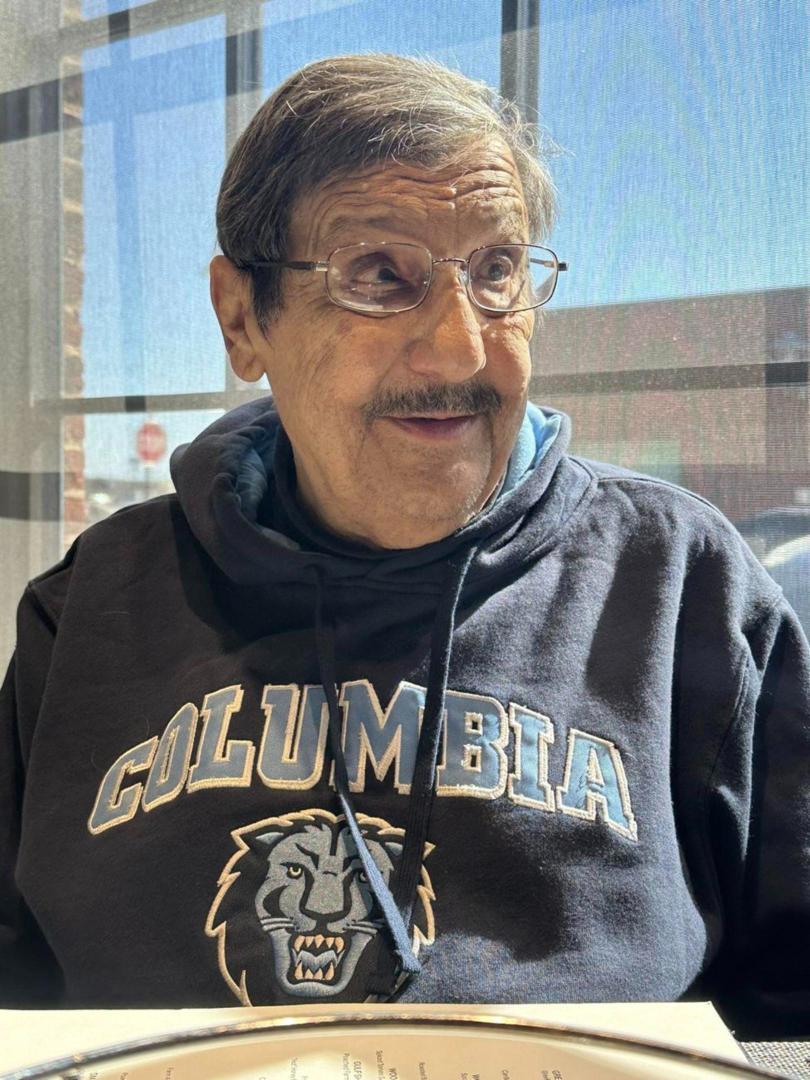
Δημοσιεύτηκε στα 88α γενέθλιά του, 21 Νοεμβρίου 2026. · Published on his 88th birthday, November 21, 2026.
In my father's childhood home, the heart of the house was a fire that was never allowed to go out. It lived in the mangali, a charcoal brazier his grandfather carried onto a boat the night the family fled Asia Minor.
My father, Sotirios "Stelios" Spiliadis, is the philosopher and historian of our family. He came to America as a young man with no English, studied at NYU and graduated from Columbia with honors in philosophy. In 1997 he, my mother Pauline and I opened The Black Olive together.
These are his words about the mangali, first in his Greek and then in English. I hope you feel what I feel when I read them: the warmth of a family gathered around the fire, which is what we try to give everyone who sits at our table.
“In the house of every Greek was an altar; on this altar there had always to be a small quantity of ashes, and a few lighted coals. It was a sacred obligation for the master of every house to keep the fire up night and day.”
— Numa Denis Fustel de Coulanges, The Ancient City
Του Σωτήρη (Στέλιου) Σπηλιάδη
Ο βωμός στο πατρικό μας σπίτι ήταν το μαγκάλι που έφερε ο παππούς μαζί με όσα μπόρεσε να φορτώσει στη βάρκα εκείνο το βράδυ που όλοι φύγανε διωγμένοι από τους στρατιώτες του Κεμάλ.
Η φωτιά μας ήταν τα αναμμένα κάρβουνα.
Γύρω απ' το μαγκάλι μαζευόμαστε τα χειμωνιάτικα βράδια, και συνήθως σιωπηλοί αισθανόμαστε τη ζεστασιά της οικογένειας που μας τριγύριζε και τις ψυχές των προγόνων που ξεπηδούσαν από τα κάρβουνα του μαγκαλιού.
Κάπου κάπου κάποιος έκοβε τη σιγή.
«Ξέρεις τι θυμήθηκα τώρα;…»
Και άρχιζε μια ιστορία που μερικές φορές κράταγε όλο το βράδυ.
Το μαγκάλι ήταν ένα πραγματικό έργο τέχνης. Σου θύμιζε κολυμβήθρα βάφτισης. Στο απάνω άνοιγμά του έμπαινε το σιδερένιο δοχείο που πάντα ο παππούς το γέμιζε με τα κάρβουνα της ημέρας στο λιακωτό του σπιτιού. Αφού τα κάρβουνα ντύνονταν τα πορφυρά τους χρώματα και ο καπνός μεταμορφωνόταν σε μικρές φλόγες που αναβόσβηναν, ο παππούς έφερνε το δοχείο στο δωμάτιο που σε λίγο όλοι θα μαζευόμαστε.
Η λεπτή επιφάνεια στάχτης κρατούσε τα κάρβουνα αναμμένα μέχρι την άλλη μέρα.
Ενώ το φως της ημέρας λιγόστευε και η λάμψη του μαγκαλιού ζωντάνευε, ένας ένας έπαιρνε τη θέση που η συνήθεια του είχε δώσει.
Η γιαγιά Τσεβή, από ώρες καθισμένη καταχάμα στο μαξιλάρι με τα κεντημένα πρόβατα — έργο της νιότης της στον αργαλειό του χωριού. Δεν της άρεσαν οι καρέκλες της γιαγιάς. Δεν ήξερε πότε θα της έλθει έτσι απότομα ο ύπνος και στο μαξιλάρι αισθανόταν πιο σίγουρη. Κατέβαζε το τσεμπέρι να καλύψει τα μάτια της όταν ο γλυκός γεροντικός υπνάκος κυριαρχούσε. Δεν κρατούσε πολύ. Σε λίγο ήταν και πάλι κοντά μας.
Η άλλη γιαγιά, η γιαγιά Ευγενία, η μητέρα της μητέρας μου, δίπλα στην κόρη της, τελείωνε το σερβίρισμα του φαγητού.
Στο πατρικό εκείνο τον καιρό τρώγαμε με όλες τις αισθήσεις· με την όραση, τη μυρωδιά, τη γεύση και το άκουσμα του σιγανού ανατολίτικου ήχου που η μητέρα πάντα σιγοτραγουδούσε σαν να νανούριζε τα μπαχαρικά που λίγο λίγο ζωντάνευαν τη γεύση του.
Η θεία Βατή — η μοδίστρα της οικογένειας με τις καρφίτσες στο πέτο και τη δαχτυλήθρα στο μεσαίο δάχτυλο του δεξιού της χεριού — έμπαινε στο δωμάτιο του μαγκαλιού τις ημέρες που το σκοτάδι της μελαγχολίας δεν την κυριαρχούσε.
Έμαθα να ονομάζω την απουσία της θείας Βατής σαν σύμπτωμα της μελαγχολίας πολύ αργότερα, όταν η υγρή από δάκρυα μαυρίλα της κάλυπτε λίγο λίγο την επιφάνεια της οικογενειακής μας κουλτούρας.
Η θεία Βάσω, η δασκάλα, έλειπε για ολόκληρους μήνες. Ήταν πρόσφατα απόφοιτος της Ακαδημίας και τα σχολεία που δίδασκε ήσαν σε χωριά έξω από την πόλη. Όταν μπορούσε να ξεφύγει και να γυρίσει στο σπίτι για μια δυο μέρες, πάντα έφερνε το πιο νόστιμο χωριάτικο καρβέλι ψωμί που όλοι περιμέναμε με όση λαχτάρα περιμέναμε να δούμε και τη διανοούμενη δασκάλα μας.
Εγώ πάντα ανυπόμονος περίμενα το χτύπημα της πόρτας. Η δουλειά μου ήταν να τρέξω στο χωλ και να τραβήξω το σχοινάκι που άνοιγε την πόρτα. Είχα μάθει τον ιδιότροπο τύπο χτυπήματος στην πόρτα που είχε το κάθε μέλος της οικογένειας.
Ποτέ δεν θα ξεχάσω του πατέρα μου το χτύπημα στην πόρτα. Ένα μοναδικό δυνατό χτύπημα ανακοίνωνε την άφιξή του. Το χτύπημα στην πόρτα ήταν το μόνο σημάδι αγριότητας που εξέφραζε ο συνήθως ήπιος πατέρας μου. Ήταν σαν να μαζεύονταν όλες οι ενοχλήσεις της ημέρας στο δεξί του χέρι και αυτό έβγαζε το άχτι του χτυπώντας αλύπητα το χτυπητήρι στην πόρτα του σπιτιού.
Η δική μου θέση στο τραπέζι ήταν πάντα ανάμεσα στον πατέρα μου και την Μπεμπέκα — το χαϊδευτικό όνομα της θείας μου της Ντίνας, της μικρότερης αδερφής της μητέρας μου.
Απέναντί μου ο παππούς κρατούσε το καρβέλι αγκαλιασμένο με το αριστερό του χέρι και με τη μαχαίρα στο δεξί έκοβε και μοίραζε τις φέτες μία μία. «Φάτε τώρα που έχουμε» έλεγε στο τέλος, και αν καμιά φορά μια φέτα έπεφτε κατά λάθος στο πάτωμα, τη σήκωνε, την έφερνε με ευλάβεια στα χείλη και την έκανε δική του.
By Sotirios (Stelios) Spiliadis. The mangali (μαγκάλι) was the family's charcoal brazier, the hearth the household gathered around.
The altar in our family home was the mangali that Grandfather brought with him, along with whatever he could load into the boat, on that night when everyone fled, driven out by Kemal's soldiers.
Our fire was its lighted coals.
Around the mangali we gathered on winter evenings, and usually in silence we felt the warmth of the family that surrounded us, and the souls of the ancestors leaping up from the coals of the mangali.
Now and then someone would break the silence.
"You know what I just remembered?…"
And a story would begin that sometimes lasted the whole evening.
The mangali was a true work of art. It reminded you of a baptismal font. Into its upper opening fit the iron vessel that Grandfather always filled with the day's coals out on the liakoto, the sun porch of the house. Once the coals had dressed themselves in their crimson colors and the smoke had turned into small, flickering flames, Grandfather would carry the vessel into the room where, before long, we would all gather.
A thin layer of ash kept the coals alive until the next day.
As the daylight faded and the glow of the mangali came to life, one by one each of us took the place that habit had assigned.
Grandmother Tsevi, seated for hours on the floor on her cushion with the embroidered sheep — the work of her youth at the village loom. Chairs were not for her. She never knew when sleep would come over her so suddenly, and on her cushion she felt more secure. She would pull her headscarf down over her eyes when the sweet old-age nap took hold. It never lasted long. Soon she was with us again.
The other grandmother — Grandmother Evgenia, my mother's mother — beside her daughter, was finishing the serving of the food.
In the family home in those days we ate with all our senses: with sight, with smell, with taste, and with the sound of the soft Anatolian melody my mother always hummed, as if lulling the spices that little by little brought the food's flavor to life.
Aunt Vati — the family seamstress, with pins on her lapel and a thimble on the middle finger of her right hand — came into the mangali room on the days when the darkness of melancholy did not rule her.
I learned to call Aunt Vati's absence a symptom of melancholy much later, when her blackness, damp with tears, was covering, little by little, the surface of our family's culture.
Aunt Vaso, the schoolteacher, was away for whole months. She had recently graduated from the Academy, and the schools where she taught were in villages outside the city. When she could slip away and return home for a day or two, she always brought the most delicious village loaf of bread, which we all awaited with as much longing as we awaited the sight of our intellectual, our teacher.
I, always impatient, waited for the knock at the door. My job was to run to the hall and pull the little cord that opened it. I had learned the particular knock of every member of the family.
I will never forget my father's knock. A single, powerful blow announced his arrival. That knock at the door was the only sign of fierceness my usually gentle father ever showed. It was as if all the day's irritations gathered themselves in his right hand, and it took out its grievance by pounding the knocker on the door of the house without mercy.
My own place at the table was always between my father and Bebeka — the pet name of my aunt Dina, my mother's youngest sister.
Across from me, Grandfather held the loaf embraced in his left arm, and with the knife in his right he cut and handed out the slices one by one. "Eat, now that we have," he would say at the end — and if ever a slice fell by accident to the floor, he would pick it up, bring it with reverence to his lips, and make it his own.
Η φλόγα από τα ξύλα που έκαιγαν στο τζάκι του σπιτιού μου στη Βαλτιμόρη γέμιζε το δωμάτιο με μια ηρεμία που σιγά σιγά άρχιζε να μου βαραίνει τα βλέφαρα.
Η ευθύνη να κρατήσω τη φωτιά αναμμένη ήταν δική μου τώρα. Στη φλόγα του τζακιού είδα τον παππού, τις δυο μου γιαγιάδες, τη μάνα μου, τον πατέρα μου, τις θείες μου, όλους να χαμογελούν στη ζεστασιά της κάμαράς μου.
Και κάτι που δεν είχαμε στο πατρικό εκείνο τον καιρό… Απαλές νιφάδες χιονιού χάιδευαν το τζάμι του παραθύρου στο σπίτι της ξενιτιάς μου.
Έτσι ξαπλωμένος, μόνος στον καναπέ, αποκοιμήθηκα περιμένοντας την Πωλίν, τον Αντρέα και τον Δημήτρη να έρθουν και να γεμίσουν το σπίτι ζωή…
The flame from the wood burning in the fireplace of my house in Baltimore filled the room with a calm that, little by little, began to weigh down my eyelids.
The duty of keeping the fire alive was mine now. In the flame of the fireplace I saw Grandfather, my two grandmothers, my mother, my father, my aunts — all of them smiling in the warmth of my room.
And something we never had in the old family home… Soft snowflakes were caressing the windowpane of my house in the foreign land.
And so, lying alone on the couch, I fell asleep, waiting for Pauline, Andreas, and Dimitris to come and fill the house with life…
— Sotirios (Stelios) Spiliadis, co-founder of The Black Olive
